
Place your bets: Predictive Markets v Sports Betting Apps
NC's recent budget added fuel to a growing fight between the two betting options

North Carolina has become a key battleground in a growing national clash between sports betting and federally regulated prediction markets.
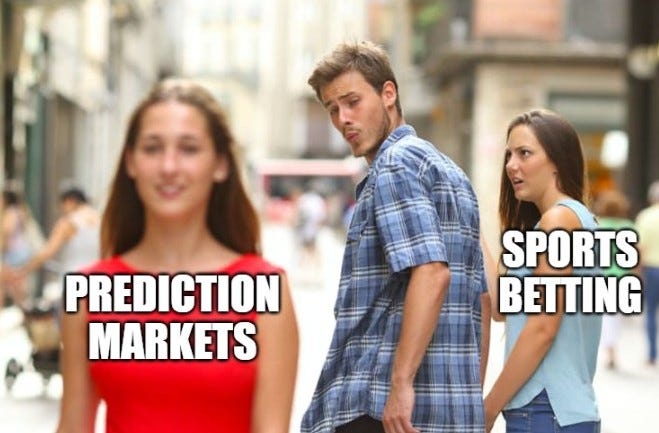
The long and short of the situation is the most recent North Carolina budget locked in higher taxes and tighter expectations for sports betting while giving prediction markets legal clarity and a far lighter fiscal and regulatory burden.
The resulting imbalance is playing out in an intense lobbying and policy fight over whether the two activities should be treated differently.
How the game started
In its recent state budget, lawmakers raised the tax on licensed sportsbooks from 18% to 23% of gross wagering revenue. Those rates became effective when the budget was signed into law by Gov. Josh Stein in early July.
At the same time, the budget created a new 6% tax on the net trading fee revenue of prediction market platforms that is attributable to North Carolina activity, with an effective date of Jan. 1, 2027.
At least one pro-gaming critic thinks the budget prioritized short-term revenue over sound legal positioning, calling the move a “royal screw-up.”
A key issue with the budget is it doesn’t impose the state licensing, registration, or the consumer-protection rules that apply to sportsbooks onto predictive markets. Instead, the language recognizes that platforms registered with the federal Commodity Futures Trading Commission (CFTC) may operate lawfully under federal rules.
The CFTC has pushed back on by critics like the American Gaming Association, which wrote to Congress earlier this year over “unregulated sports event contracts being offered by prediction markets.”
Associations are the only pushback the CFTC is facing. North Carolina Attorney General Jeff Jackson co-signed a letter initiated by Maryland’s attorney general to CFTC Commissioner Michael Selig this past April.
The letter made a nearly argument as the American Gaming Association, claiming “Sports betting on prediction markets through “event contracts” is indistinguishable from traditional sports betting.”
The letter to Selig had signatures from officials in 41 states, including D.C., 23 of which were Democratic attorneys general, including Jackson, and 18 were Republican attorneys general.
Former NJ Gov. Chris Christie lashed out after the budget passed, claiming lawmakers were “hoodwinked,” by predictive markets in an op-ed run in July by the News and Observer. Notably, Christie is an “advisor” to the American Gaming Association.
The players
Prediction markets, such as Kalshi and Polymarket, let users buy and sell contracts tied to the outcomes of future events—sports results, elections, economic data, weather, and more. Because they are structured as event contracts under federal commodities law rather than state gambling licenses, they have been able to operate nationwide with lighter state-level oversight.
Sports betting platforms in North Carolina let adults 21 and older physically located in the state create an account on a licensed app or site. Individuals can then deposit money and place wagers on the outcomes of sporting events—such as who wins a game, the point spread, total points scored, and more, with the odds set by the operator.
If the bet wins, the platform pays out according to the set odds, while the state regulates the activity through the NC State Lottery Commission and then taxes the operators.
The main licensed online platforms currently operating in North Carolina include FanDuel, DraftKings, BetMGM, Caesars Sportsbook, Fanatics, bet365, and TheScore Bet.
Bases loaded or snake eyes?
Critics argue this creates a “backdoor” for sports-style wagering: many of the same outcomes available at regulated sportsbooks can be traded on prediction markets, but at a much lower tax rate and without the same state rules on age verification, responsible gaming, or licensing fees.
Sports betting operators and their allies are arguably framing the situation as an existential competitive threat. Sports betting already faces higher taxes, million-dollar licensing costs, and stricter state regulation and the related platforms are starting to make the argument that betting volume could shift to lighter-regulated/taxed prediction platforms.
The state has seen substantial tax revenue collected to the tune of hundreds of millions since online sports betting launched in 2024, with some critics warning that the budgetary disparity could blow a sizable hole in expected state revenue if sportsbooks or bet placers migrate.
Prediction-market advocates counter that these are federally supervised financial markets, not unlicensed gambling, and that North Carolina’s approach of taxing while deferring to the CFTC is a pragmatic middle ground that avoids costly litigation other states are fighting.
Lobbyist enter the lineup
Both sides have mobilized lobbyists and former elected officials.
Former North Carolina Republican Congressman Patrick McHenry, now a senior adviser to the Coalition for Prediction Markets, has pushed the pro-prediction-market view that these are legitimate, CFTC-regulated markets. McHenry briefly led the U.S. House as speaker prior to retiring from Congress in 2023.
Former White House official Mick Mulvaney, now with the group Gambling Is Not Investing, has sharply criticized the North Carolina provision as a “sweetheart deal” that favors unlicensed sports gambling under a different label.

The bigger game
This rising debate is playing out against a national backdrop of lawsuits, CFTC interventions, and conflicting state approaches. Some states are trying to ban or heavily regulate sports-related event contracts while others, like North Carolina, are exploring taxing avenues.
North Carolina is being watched as a potential model, or alternatively, a cautionary tale, because it is now the first state to permit prediction markets; formally codifying CFTC authority while still collecting taxes.